Curriculum, Pedagogy, and Assessment. In that order.
One of the hardest things to do in education is keeping the main thing the main thing, as things that have little impact on student achievement, but are easy to implement, often displace more important and more impactful, work.
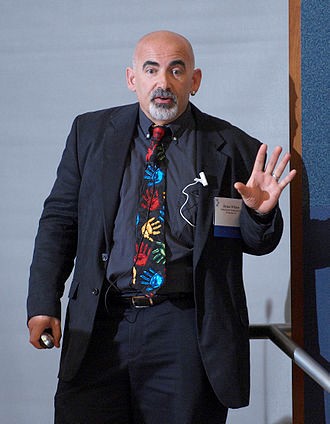
In this interactive workshop, Dylan Wiliam will argue that to make education work for all students, schools must begin with a focus on what outcomes we want for our students, and only then look at what educational activities will produce those outcomes, how those activities should be organized, and how we can determine whether our efforts have been successful: curriculum, pedagogy, and assessment in that order.
The workshop will begin by stressing that there is no such thing as a perfect curriculum. Inevitably any curriculum involves compromises, and these can be the result of debate and discussion or can emerge as unintended consequences of decisions taken earlier in the development process.
To help focus the discussion, the workshop will introduce participants to seven principles of curriculum design that, while sometimes in tension, can lead schools to make better trade-offs.
The middle part of the workshop will focus on how we can design classroom activities that develop the desired capabilities in our students, drawing on research from evolutionary psychology that shows why something are easier than others to learn, and then suggests what kinds of classroom approaches are likely to be most successful, given what is now known about how human memory and reasoning work.
Specifically, the workshop will explore why knowledge is essential for complex capabilities such as critical thinking, creativity, and problem solving, and the best ways to develop—and maintain—these capabilities in our students.
The final part of the workshop will examine ways in which we can find out whether our instructional practices have been successful, by examining the main purpose of assessment as a process for drawing conclusions. We will explore the architecture of effective assessment systems, starting with understanding what it means for students to progress in different subjects, and how to identify important checkpoints along the way, including a consideration of how teachers can record, and report on, student outcomes.
Hear what Dylan has to say about this workshop: CLICK HERE
Need accommodation: Want to stay at the Grand Millennium venue, we have a special room bed/breakfast rate of $255 single occupancy/$285 double occupancy for Superior room . Or a Deluxe Room $280 single occupancy/ $310 double occupancy
Just quote LNDA27 when booking
Here’s how to book:
- Click on this link for the hotel’s website Grand Millennium Auckland
- Select “Book Now” Enter in your check in/out dates on the right hand side.
- Select “advanced search” Load the promo Code into the promo Code cell under “Use Promo/Offer Code” to get the negotiated group rates
- Select your room and proceed to check out